

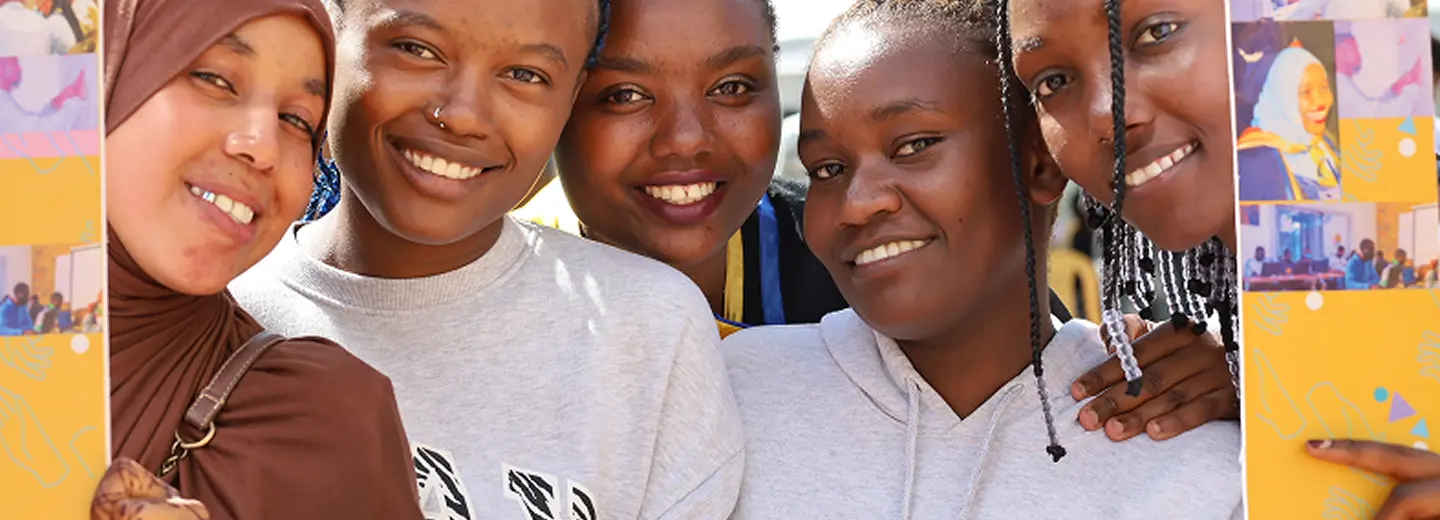
Growing up in Eastlands, Nairobi, nobody in my family talked about reproductive health. The silence felt like shame. When I found iAccess at 19, everything changed.
I was 16 when I first realised something felt wrong with my cycle — irregular, painful, and completely unpredictable. My mother told me to pray. My friends shrugged. My school nurse gave me paracetamol and sent me back to class. Nobody had a real answer, and I was too embarrassed to push for one.
The shame wasn't mine — it was inherited. In my community, talking about reproductive health meant talking about sex, and talking about sex meant you were doing something wrong. So I kept quiet for three years, managing the pain alone, convinced that what I was experiencing was normal, or worse, my fault.
The Day Everything Changed
I was 19, in my first year at university, when a classmate shared a link to iAccess in our WhatsApp group. “There's actually good info here,” she wrote. I opened it expecting something clinical and distant. Instead, I found stories from people who sounded like me. I found a health finder that showed me a free clinic 2.3km from campus. I found language I had never had before — terms like PCOS, dysmenorrhea, endometriosis. Suddenly, what I had been experiencing for three years had a name.
“Suddenly, what I had been experiencing for three years had a name. And a name meant I could fight it.”
Within two weeks, I had made an appointment at the Nairobi Youth Wellness Centre I found through the Health Finder. The nurse there was unlike anyone I had encountered before — calm, thorough, and completely judgement free. She asked me questions I had never been asked. She explained things in Swahili when I struggled with the English medical terms. She referred me for an ultrasound.
The Diagnosis
I had polycystic ovary syndrome (PCOS). The doctor who explained my results said it was manageable — with the right diet, exercise, and where necessary, medication. She also confirmed what I had long suspected: the pain I experienced each month was not normal, and I did not have to live with it. Three years of suffering, explained in a 20 minute consultation. I cried in the taxi home — not from sadness, but from relief. And from anger. Anger that I had lived with this silently for so long. Anger that no one — not a teacher, not a nurse, not a family member — had ever told me that these things could be talked about.
What I Want Other Young Women to Know
You are not being dramatic. If something feels wrong with your body, that feeling deserves to be taken seriously. You have the right to accurate information, and you have the right to a healthcare provider who treats you with dignity.
iAccess gave me both. Not just the information, but the confidence to walk into that clinic and say: “I need help.” That might sound like a small thing. For me, it was everything. Since my diagnosis, I have shared the iAccess link with every woman I know. I've talked about PCOS openly in my university's women's group. I've watched three friends get diagnoses they had been searching for. The silence is breaking, one conversation at a time.